
http://media.netpr.pl/notatka_91931.html
2008-01-18
[10:11] DCMS and UK National Commission for UNESCO hosts 'World Heritage: Science and Technology: An Expert Workshop'
PRNewswire-GNN London 18 January
Editor's Note: 1. The programme for the workshop can be found on the UK National Commission for UNESCO website at http://www.unesco.org.uk/Science_Heritage_Meeting.htm. 2. There will be particular focus on four areas: astronomy, physical sciences, biological sciences and engineering and technology. 3. This workshop was organised at the UK's suggestion during the 31st session of the World Heritage Committee, held last July in Christchurch, New Zealand. 4. The outcome of this meeting will contribute to the development of guidelines for the identification of sites and a preliminary framework for the evaluation of properties of interest for the heritage of science and technology and their potential inscription on the World Heritage List. The recommendations of the Workshop will be submitted to the 32nd session of the World Heritage Committee. This session will be held from 2-10 July in Quebec, Canada. 5. The concept of World Heritage Sites is at the core of the World Heritage Convention, adopted by UNESCO in 1972, to which 184 nations belong. The Convention required the establishment of the World Heritage List, under the management of an inter-governmental World Heritage Committee, as a means of recognising that some places, both natural and cultural, are of sufficient importance to be the responsibility of the international community as a whole. The UK ratified the World Heritage Convention in 1984. Press enquiries: 020 7211 6272 Out of hours telephone pager: 07699 751153 Public enquiries: 020 7211 6020 www.culture.gov.uk 2-4 Cockspur Street London SW1Y 5DH www.culture.gov.uk Department for Culture, Media and Sport
London, 18 January /PRNewswire-GNN/ --
DEPARTMENT FOR CULTURE, MEDIA AND SPORT News Release (004/08) issued by The
Government News Network on 18 January 2008
A three-day international workshop, designed to develop guidelines to identify
future World Heritage Sites which represent advances in science and technology
of global significance, will be hosted next week by the Department for Culture,
Media and Sport and the UK National Commission for UNESCO on behalf of the
World Heritage Committee.
The workshop, taking place from 21-23 January, brings together experts from
15 countries, representing the physical sciences and technology as well as
those with detailed knowledge of the operation of the UNESCO World Heritage
Convention.
The delegates will discuss ways to create a scientific framework, to help
identify and recognise sites which represent the heritage of science and
technology that could potentially become World Heritage Sites. The conclusions
of the expert meeting will be presented to the World Heritage Committee for
consideration at their next meeting this July in Quebec, Canada.
Department for Culture, Media and Sport
other formats print
.txt (1-5kB)
Saturday, January 19, 2008
WORLD HERITAGE WORKSHOP: ARE YOU ATTENDING?


Friday, January 18, 2008
ANCIENT MAYAN REINTRODUCTION PROGRAM ANNOUNCED

The Wish and Wildlife Service, working in conjuction with federal immigration authorities, announced it would proceed with the ANCIENT MAYAN REINTRODUCTION PROGRAM. WWS and immigration officials will offer two years in the program to any illegal alien arrested, as opposed to deportation. Willing participants must live a minimum of two years in the wilds of Catron county to be eligible for U.S.citizenship. WWS officials say the program is needed to control the booming Mexican Gray Wolf population in the region. Native American tribes were approached about the program.
After the initial laughter died down tribal leaders suggested the WWS employees leave while they still had their hair. WWS conceeds its a bit of a stretch to claim the ancient Mayans inhabited present day New Mexico; but as one official stated: "Accuarate science and history has never been a strong point of this agency".
U.S. opts not to plan for jaguar recovery

Subject: U.S. opts not to plan for jaguar recovery
U.S. opts not to plan for jaguar recovery
By Dan Sorenson
Arizona daily star Tucson, Arizona | Published: 01.18.2008
There will be no recovery plan, at least not one with teeth, for the rarest of the wild animals native to Arizona — the largest and rarest cat species of North America — the jaguar.
The Center for Biological Diversity, a conservation group that has pushed for an official plan to set goals and spell out and enforce efforts to save the big cats, portrays the move as a concession to the Bush administration's border-fence project.
But a spokeswoman for the U.S. Fish and Wildlife Service's Southwestern Region maintains that a formal plan wouldn't help the big cats, and the lack of one won't damage the federal agency's ongoing support of less-official efforts to protect the jaguar.
The official stand against a recovery plan was spelled out in a Jan. 7 memo signed by the agency's director, Dale Hall.
The jaguar was put on the federal endangered-species list in 1997. By some accounts, it once ranged as far west and north as the Monterey Bay coast and east to the Appalachian Mountains.
But it has rarely been seen in recent decades, and then only barely north of the U.S.-Mexico border, usually in Arizona or New Mexico. Since it was listed as endangered, only four jaguars — all males — have been confirmed alive in Arizona. And those were thought to be border crossers from a dwindling, but larger, population in northern Mexico. Populations of jaguars are known to exist throughout Mexico and into Central and South America, but they are thought to be under pressure from human development throughout their range.
The decision not to create an official recovery plan doesn't change anything about the protection afforded the jaguar, said Elizabeth Slown, spokeswoman for the federal agency's Southwestern Region headquarters in Albuquerque.
"What we said is that … doing a recovery plan for the jaguar doesn't advance conservation for the jaguar," Slown said.
"We'd rather put our efforts into on-the-ground efforts: participating in the Jaguar Conservation Team led by (the state of) Arizona, continuing to fund research we do throughout Central America," she said.
"The jaguar is still under (the protection of) the ESA; it doesn't affect that at all," Slown said, referring to the Endangered Species Act.
"Instead of a 200-some-page recovery plan," Slown said, "let's help the countries where the jaguar can survive and help the Jaguar Conservation Team."
The agency's argument that a plan is inappropriate because only a few jaguars exist in the United States is flawed, based on its own history, said Kievan Suckling, policy director for the Center for Biological Diversity.
He said a federal recovery plan re-established populations of the Mexican gray wolf in the U.S. when none had been living here. Captive wolves from Mexico were bred and their offspring released in the United States.
Climate change may make protection of jaguar migration corridors and U.S. habitat even more important as jaguars and other large mammals are pushed north, Suckling said, citing a report by the American Society of Mammalogists.
Although exact effects of climate change on large mammals cannot be predicted, large mammals are vulnerable, particularly when they try to move and come in conflict with humans and development, said Joseph Cook, society member and University of New Mexico mammalogist.
"Climate change is not affecting the planet equally," Cook said. "It's not just a general blanket that everything is going to get warmer.
"But we do know that things are happening, and the federal agency that is responsible for this organism should be taking a closer look" at the implications of the border fence.
He said the fence will be particularly obstructive for large mammals that try to avoid humans, such as black bears, mountain lions and jaguars.
Cook said the agency's position amounts to the United States "washing its hands" of the jaguar and could have a negative effect on jaguar populations outside the United States.
He said Mexico and countries in Central and South America have copied the U.S. National Parks system and U.S. conservation efforts.
"This is a very international species, and the U.S. should be taking a lead role in recovering it. A lot of developing countries look to the U.S. as a model for how you develop conservation programs," Cook said.
"Fish and Wildlife has a long history of helping these countries develop conservation programs. (But) in the last seven years, in my view, there has been pressure on Fish and Wildlife to not take a lead on conservation issues."
Cook also said a recovery plan increasing jaguar populations could have economic implications. He said he frequently works in Alaska and many visitors are attracted to the state by the presence of large mammals, particularly top predators.
? Contact reporter Dan Sorenson at 573-4185 or at dsorenson@azstarnet.com.
Thursday, January 17, 2008
PROTEST THE WALL!
Illegal advocates and criminal elements are opposed to a fence or wall being constructed on the U.S. Mexican border. They grumble about protests against 'the wall'. Here's a wall they can protest.


CEMEX REFUSED TO BID ON BORDER PROJECTS
Cement company in Arizona (Mexican owned) Refuses to Bid on Border Projects
From: info@americanfreedomriders.com
Sent: Wed 1/16/08 3:45 PM
To: info@americanfreedomriders.com
Cemex, a huge Mexican owned company which manufactures, concrete, cement, asphalt, and concrete pipe, has bought out the Rinker Group and is now one of the largest suppliers in the world. The acquisition resulted from a hostile takeover and gives Cemex over 100 locations in Arizona alone.
A Mexican company is now the largest supplier of ready mix concrete and cement in the USA !! Our global economy at it's best. Thank you Global George and your CFR friends !!
See article: http://www.concreteconstruction.net/industry-news.asp?sectionID=718&articleID=512442
Now we find out, from a very reliable source who lives on the Arizona border and is employed in this industry, that
Cemex will not allow any of its locations to bid on any construction project which relates to border security on the Arizona/Mexico border !!
Could this practice be a result of pressure from a Mexican government doing its best to ensure the easiest possible access for millions of illegal aliens streaming across the border into Arizona?
Could it be the influence of the Gulf Drug Cartel, which is also based in Monterrey, Mexico? Certainly they have the money, power, and incentive to interfere with our efforts to secure the border.
Whatever the reason, it certainly will have the approval of John McCain. That lying worm.
This practice is wrong and needs to be exposed. Cemex belongs at the very top of all boycott lists.
Look at all their locations in Arizona alone: http://www.rinkermaterials.com/locations/States/locnST_AZ.shtml While you're there, take a look at Florida. The profit from every sale they make goes back to the elite in Mexico who could care less about their working class, and we keep hearing how poor Mexico is.
Please pass this on and encourage a boycott of these Reconquista invaders.
Danny Smith
www.americanfreedomriders.com
SOME COMMENTS ON CORY VOORHIS
Cory Voorhis is an ICE Agent who is caught up in the dirty politics so common in our nation today. His contribution to battle the flood of illegals into the U.S., the Mexican drug cartels and the fake ID industry in Mexico may never be fully appreciated in American History. I should have done more to alert our community to the Cory Voorhis story. I've posted a 'political satire' cartoon on the right side of the blog. I've put the Voorhis information back at the top of the blog. I had posted the Voorhis story before, but took it down as I thought more pressing matters needed to be up there. I was wrong. The Voorhis story is important to all of America because the politicians and corrupt government officials don't want YOU to know about the Voorhis story and who knows what more is out there. The blog can't cover everything, but I want readers to spend some time on the Voorhis story and send it out to other concerned Americans.
Wednesday, January 16, 2008
WHAT DO YOU THINK ABOUT THIS?
An article in Indian Country Today: Aug. 13, 2007 tells of Native Americans trying to create a buffer zone around Bear Butte, a traditional prayer and fasting site near Sturgis, SD. Native Americans claim bikers disrupt ceremonies and vision quests with motorcycle noise and the selling of alcohol within 4 miles of Bear Butte.
What do you think of this? What if towns near the Pine Ridge Reservation in South Dakota tried to implement the same ban. What would be the reaction if Gordon, Nebraska, or Rushville or Alliance Nebraska attempted to create a 4 mile buffer zone around their city limits banning Native Americans from consuming alcohol or gathering in groups where alcohol related activities were taking place? Read the article and leave a comment here or on the General Discussion Board.
The link is posted on the General Discussion Board.
Tuesday, January 15, 2008
Wolves in Russia/Anxiety Through the Ages, The Book
This book gets 5-star ratings. A few excerpts of reviews on Amazon.com:
Barney Nelson, Ph.D., says in introduction to the Range article, " 'Wolves in Russia' is a must-read book for wolf advocates, ranchers, college professors, government agencies, and those who might be camping in wolf territory. Will Graves' balanced investigation provides rare honesty and sanity in a groundbreaking and illuminating collection of Russian wolf science and documented predation on humans and livestock. The book paints a vivid picture of government suppression of information; it documents the effect of an unarmed population on wolf behavior; and it points to cycles of terror and starvation that correspond to wolf population explosions."
And, This book must be read by every serious wildlife biologist, resource decision maker and park manager, as well as the recreation-minded, for it clearly shows that co-existence between man and animal has limits that can never be forgotten." James A. Swan, Ph.D., from Not-so-cuddly canines.
And, "This amazing book presents for the first time,in detail, the facts on Russia's huge wolf problem." Jim Rearden, Ph.D. former Head of the Wildlife Department at the University of Fairbanks, and author of "The Wolves of Alaska."
http://www.amazon.com/review/product/1550593323/ref=dp_top_cm_cr_acr_txt/103-1505145-4829423?%5Fencoding=UTF8&showViewpoints=1
If you haven't read it, scroll up to JAMOLOV HAKIMOVA: WOLF ATTACKS IN UZBEKISTAN and click on the link to Jamolov's blog.
Forest Service "Untravel" Managment Team Gives Local Club The Hot Wire Cluster
Last night at the FS public hearing/informational workshop/"they get overtime, you don't" meeting, a representative of Desert Mountain 4WD Club got the major run around. Seems as though this guy had done all the right things, filled out the paperwork and even volunteered his club's time and resources to clean up Dry Canyon. The Desert Mountain 4WD Club wanted the area, now closed to 4WD, reopened.
What a travesty. Isn't Lincoln National Forest big enough to support any recreational activity? I may or may not approve of 4 wheeling but if it is going to be disallowed, then I have to protest. Look at the new digs of the Forest Service, acres of fragile desert bulldozed and paved, and all their late model 4 wheel drive trucks that usually sit in the parking lot. Talk about environmental destruction.
Monday, January 14, 2008
SPECIES SUCCESS, SPECIES AS PREY AND PINE BEETLES
I was reading the Denver Post this afternoon and came upon two stories that shared a common link to global warming. One of the stories sounded the alarm of pine beetle devastation of Colorado’s mountain forests. The other story told of the pika (Order Lagomorpha) becoming scarce in the mountains. Both stories alluded to global warming and man’s interference with nature. I worked in Grand Teton National Park in the early 70’s. We would only see pika in the higher, rocky canyons and slag piles of glacier debris. The article seems to indicate that pika are common in all parts of the forest. The article also describes pika as rodents. They are not rodents; they are members of the order Lagmorpha, the family to which rabbits belong. The pine beetle story said Colorado would loose 1.5 million acres of forest land to the beetle infestation which began in 1996. In the 70’s Colorado and other mountain states experienced pine beetle infestations of mountain forests. The solution then was to fell the infected trees. Forest service employees scoured the mountain sides and sprayed blue markings on the trees to be felled. Cutting permits were sold to the public to allow cutting of the marked trees. Private concerns and individuals thinned the forests and hauled to wood off to their fireplaces and woodstoves. Today such cutting is not allowed because of environmental policies put in place to prohibit sane management of the forests. The beetle infested forests are now tinder boxes waiting to explode into a summer firestorm of a record forest fire season in 2008. Its not global warming that is destroying the forests.
The environmental land grab scam is to blame for forest destruction throughout the West. I have to ask the wolf release advocates what the definition of critical habitat is, considering the condition of forests in the American Southwest. Is critical habitat the herds of cattle owned by ranchers or the pristine forests protected by environmental policy? If those forests burn; where will the wolves go? As for the pika; did anyone consider that the comeback of eagles in the West might have something to do with a reduction of the pika population? If the connection can be made between predator and prey, as so eloquently justified by wolf release advocates, then we either blame global warming on eagles or just assume pikas are easy prey for raptors.
http://www.denverpost.com/commented/ci_7967666?source=commented-
More from Agri-News on Wolves
Reprinted with permission of Agri-News, editor@imt.net, www.cattleplus.com.
January 9, 2008
Friends of the Northern Yellowstone Elk Herd invite ranchers to fight for wolf delisting
By Tami Arvik Blake, Agri-News editor
Sidebar
WILL RANCHERS UNITE TO FIGHT WOLVES?
If it's going to happen, it has to be before the end of February.
Total cost of a lawsuit to force the federal government to immediately delist wolves will be $200,000.
That's 200 people contributing $1,000 each... 400 people contributing $500 each... you get the idea.
Want more information? Call Friends of the Northern Yellowstone Elk Herd president, Bill Hoppe, at 406.848.7651, or simply send donations to FOTNYEH, 172 Jardine Route, Gardiner MT 59030. Bob Fanning can be reached via email: rtfanning@att.net.
Story Text
It's not too late: ranchers can still take the Rocky Mountain gray wolf to court.
Though the federal government has promised to remove the wolf from the Endangered Species List in February of this year, experts agree that lawsuits brought by environmental groups will likely tie the issue up for some ten years.
That means ten more years of wolf protection - and ranchers, livestock, and wildlife paying the price.
There is one way to avoid that scenario, though. What if somebody can beat the environmentalists to the punch by suing the federal government to immediately delist wolves before the official announcement comes next month?
The groundwork for just that sort of action is already finished.
Of course, there's a certain procedure that must be followed when taking legal action against the Endangered Species Act. Complaints must be filed before deadlines, and as far as wolves are concerned, those deadlines are long past.
The state of Montana does not have legal standing right now to fight for immediate wolf delisting.
But Bob Fanning does, and he's hoping that ranchers will team up with him to remove federal protections from wolves.
Fanning is the founder of Friends of the Northern Yellowstone Elk Herd, a small organization based out of Fanning's home deep in the mountains north of Yellowstone Park. FOTNYEH is the only entity in the states of Montan and Idaho that has legal standing to sue the federal government to delist wolves.
The only thing missing is the money - and the public interest.
Fanning hoped to gain both when state representative Diane Rice (R-Harrison) carried House Bill No. 343, "An Act appropriating money from the General Fund to the Legislative Services Division to fund state participation in a pending lawsuit against the federal government challenging the failure of the federal government to remove wolves from the Endangered Species List," during the 2007 session.
"Since this is the only entity that can litigate on behalf of the people of Montana, I believed that the state of Montana should appropriate money to help them file a lawsuit to encourage delisting," Rice says.
The bill asked for a $200,000 appropriation to pay for the lawsuit. It passed the Montana House by a margin of 63:37 but died in the Democrat-controlled Senate Finance & Claims Committee.
Fanning says that the Governor's Office and Montana Fish, Wildlife & Parks were both in opposition to the bill. "It's a political issue because Fish, Wildlife & Parks wants to maintain control over the whole wolf thing," he says. "They get a tremendous amount of money to implement and administrate their federally-approved/imposed wolf management plan, and they don't want to jeopardize that money."
What FWP fails to realize, Fanning says, is that the wolf money comes at the expense of the state's livestock and hunting industries.
The state and wolves
Serving her fourth term in the Montana legislature, Diane Rice knows a thing or two about livestock. She and her husband are partners in Rice Angus, and she previously served as chair of the House Ag Committee. She is currently chair of the House Judiciary Committee.
Ranching in the Madison Valley northwest of Yellowstone, the Rices have had a few encounters with wolves. A pair of the predators, in fact, terrorized their heifers the night before the ranch's annual production sale in November.
Rice understands the issues because she's rooted in the ag industry. And that's why it's been important for her to take wolf legislation to Helena. In 2003, HR32 - a resolution urging the US Congress to delist wolves - passed the Montana legislature.
That same year, HB283 - directing Montana's Attorney General to explore the state's rights to all wolf-related legal options - also passed. According to Fanning, Attorney General Mike McGrath "defied" that order from the state legislators and never did pursue the issue. That's why the state does not have legal standing today to proceed with wolf litigation.
And in 2005 HJR29 made a strong statement: "... Clarifying to appropriate federal government officials that Montana reserves its applicable rights and remedies to request federal predator control and to exercise rights and remedies to prevent and control damage or conflict on federal, state, or other public or private land caused by predatory animals, and urging the Montana Congressional delegation to take appropriate measures to obtain meaningful funding and assistance for Montana citizens and communities that have been adversely affected by wolf reintroduction."
That resolution passed by a "super majority," Rice says, but has not received much attention in Washington, DC.
Not surprising behavior, Fanning says, from agencies that deceived Congress - which approved the reintroduction of wolves to Yellowstone Park in November of 1994 - into believing that the reintroduction would minimally impact people and wildlife. He says that in 1988 the Department of Interior commissioned a Delphi 15 study that concluded a reintroduced wolf population would grow to 100 animals at the most.
"Their computer model said, if we reintroduce some wolves, in 10 to 20 years we'll get to 70, 80, maybe 100 wolves," Fanning says. "They knew all along that wolf packs reproduce at a 34 percent rate, but they deceived Congress into thinking it would be a little number."
Fanning guesses that there are about 1,600 wolves in Montana alone now. "They stopped counting these wolves years go. They don't want you to know where they are or what they're up to."
Fanning doesn't doubt that the recent public comment period concerning wolf delisting - open to anybody across the nation - garnered a majority response in opposition to delisting. But he believes that's all part of a master plan: "Come February, the US Fish & Wildlife Service will issue an administrative order to delist, in defiance of the emotional popularity contest," he explains. "Then those people who have been allegedly 'harmed' will gain standing to file lawsuit because they've been 'harmed' by the delisting order. They will get to court before anybody else has a chance, and then it will be tied up for years.
"The easiest thing to do in litigation is stall. The longer you stall, the more these wolf populations grow."
That's why it's important, Fanning says, for a lawsuit to be filed before the delisting order, expected February 28.
Simply put, if ranchers and sportsmen don't get their foot in the door soon, it will be too late.
A biological desert
It's the sportsmen side of the equation that Fanning relates to.
He's a Notre Dame graduate who worked on Wall Street for 20 years and later became CEO of his own company. Through the normal course of his business, he says, he learned the ins and outs of the legal system. "So I've got the skills set to be involved in this mess," he says.
He came to Montana to hunt elk for many years and came to stay in 1996, settling on a small acreage 20 miles north of Yellowstone Park. When he first moved in, the Northern Yellowstone elk herd - one of the largest migratory herds in the nation - moved across his land on its way to and from winter grazing.
"I had the chance to see 6,000 or 7,000 elk pass by my house every year. If that was too many, now we see zero."
Today, he calls the landscape around his property "sterilized." By 1998, he says, there were almost no elk in the wilderness around his home. "All you saw was wolf tracks on the game trails, and you don't hear bugles, you don't see rubs, you don't see fresh droppings.
"In years gone by I could ride up to a wolf on the trail," he says. "I've had them run by my house. But now that the game herd is so severely depleted in Yellowstone Park, they're up in the Shields Valley, the places that people never imagined. Southern Park County is a biological desert. Buffalo give the impression that Yellowstone Park is teeming with wildlife. Well, wolves are opportunistic killers, and buffalo are tough characters."
Fanning says at one time it was easy to count elk as they trailed across his property. At one time, he says, there were nearly 20,000 in the Northern Yellowstone herd; now he guesses there are only 5,000 remaining.
Fanning says FWP has refused to recognize the elk population decline. Because predators have driven the elk onto private land and into new areas of the state, the population is more noticeable to the general public. FWP even hosted an extended elk season this year.
But Montana hunters no longer find elk where the animals once were. Rice notes that, because of that, out-of-state hunter numbers for Montana declined by 42% in the period between 1995 and 2005. In-state hunter numbers declined by 21% in the same. That leaves a gaping hole in the state's economy, previously filled by what was over a $230 million industry.
Rice blames increased hunting fees for some of that decline, but a displaced and deteriorating elk herd for a good part of it.
When wolves follow wildlife onto private land, they become acquainted with livestock and habituated to settlements. That's when they acquire a taste for beef and lamb, the meat carried by easy prey.
"And once they get used to seeing people, children are not so difficult to take down," Fanning warns.
A day in court
When he first moved to Montana, "I thought I'd be a hermit in the middle of nowhere," Bob Fanning says. But his frustrations over the declining elk population in his backyard wilderness led to the beginnings of Friends of the Northern Yellowstone Elk Herd, and now he's in the fight perhaps deeper than he'd like to be.
"This isn't about me and I don't ever want it to be about me," he says. "I wish somebody would come and take it away. We passed laws where the state of Montana should have asserted its legal rights and delisted the wolf years ago. But the state didn't, and now this is the only avenue to fight for delisting. Anybody can pay for the attorney fees and file the lawsuit. They just have to go through me, unfortunately, because I'm the only person in the states of Montana and Idaho with legal standing to do so."
Fanning envisions a coalition of ranchers and sportsmen taking this case to force wolf delisting to the highest court in the nation - and winning. "The case is a shoo-in because the reintroduction of wolves was actually illegal. There were wolves in Montana before the reintroduction. And now that they're here, the situation will take care of itself and the damages will stop if we can just delist the animal. The most unnatural thing about the wolf is the fact that it's being protected.
"I neither love or hate wolves," Fanning says. "I just hate bureaucrats that exploit anything for their own advancement. I'll be the first to admit wolves are here to stay. But the protection has to come off the animal so the animal is given the opportunity to learn how to behave around people.
"Here's what the common guy in the state of Montana should ask himself: Why is the little guy systematically denied his day in court over wolves by politicians? As long as I breathe on this planet, I will be willing to take this to the Supreme Court... but I'm not paying the legal bill."
Diane Rice agrees that the case is something every Montanan should consider being a part of. First of all, the people of Montana own the state's wildlife population and have a right to file for wolf-caused damages on the same.
Second of all, wolves kill livestock, and that hurts ranchers' bottom lines. Though ranchers close to the park have taken the brunt of the punishment thus far, she says, the wolves will soon spread all across the state, and into other states, in pursuit of elk and livestock.
Rancher or sportsmen, Fanning envisions both coming together to battle for wolf delisting.
"If you're angry about the buffalo in Yellowstone Park, if you're angry about the way the bully in Helena is treating you, if you're angry that you didn't get an elk this year, or if you're angry that elk have been pushed down on your property by wolves, then I'm offering you the standing to have your day in court," he says. "Consider it a chance to protect your livelihood, culture and heritage."
- Tami Blake, Agri-News editor
Tami Jo Arvik Blake
Agri-News editor
PO Box 30755
Billings, Montana 59107
406.259.5406
Friday, January 11, 2008
EPA CLOSING ITS LIBRARIES
The Union of Concerned Scientists is pressuring the Environmental Protection Agency to stop the current trend of either destroying or with holding its 'science' data from Citizens or other scientific operations. The EPA is not complying.
"EPA Press ReleaseUCS is asking activists to call Environmental Protection Agency (EPA) Administrator Stephen Johnson and urge him to halt the dismantling of the library system. Several libraries have already been closed, with their contents either destroyed or shipped to repositories where they are uncataloged and inaccessible.
Pressure from UCS staff and activists, as well as other organizations, has driven media coverage of the problem. The EPA has responded with a press release and press conference, both of which failed to address many of the central problems with the EPA's decision to close its libraries. There are even factual errors in the press release; the American Library Association has not provided guidance or criteria to the EPA and continues to raise significant concerns about the EPA's actions.
The EPA tells us that some UCS activists' phone and email messages to specific EPA public affairs staff have been brought to EPA senior management. As a result, EPA has asked to meet with UCS over the next few days. Calls are still needed, however, to let the EPA know that citizens and scientists are still concerned about this problem and are watching the EPA's actions. Also, if you are a researcher whose work has been or would be impacted by library closure and/or delayed access to documents, we would like to share your story with the EPA; please confidentially email UCS Analyst Tim Donaghy or call him at (202) 331-6944."
http://www.ucsusa.org/scientific_integrity/restoring/scientific-integrity-update-01-2007.html
POT SMUGGLER PAINTS TRUCK LIKE TEXAS DOT VEHICLE

How could the Texas authorities not know this truck was a fake from Mexico?
Cliff Spencer to Leave White Sands and Go to Another U.N.World Heritage Site
But did he produce a General Management Plan for White Sands National Monument during his tenure? He did produce a map where First Amendment activities are allowed at White Sands National Monument. Good job, Cliff.
Intermountain Region News Release
Cliff Spencer to Head Petrified Forest National Park
DENVER – Clifford (Cliff) Spencer, a 23-year NPS veteran, has been selected the new superintendent of Petrified Forest National Park in Arizona, according to
Intermountain Regional Director Michael Snyder.
Spencer will assume his new responsibilities February 3, 2008. He succeeds Brad Traver, who served in an interim capacity following the transfer of Superintendent
Lee Baiza.
Currently serving as superintendent of White Sands National Monument, Spencer led the rehabilitation of historic adobe buildings, replacement of a handicapped
accessible boardwalk, and the successful reopening of the Monument following extensive flooding in 2006.
“I feel fortunate to be going to Petrified Forest, and look forward to working with park staff, local agencies, park neighbors and others in maintaining the infrastructure and increasing visitation to a great place.” Spencer said.
Prior to his assignment at White Sands, Spencer served in various ranger assignments at Point Reyes National Seashore in California, Shenandoah National Park in Virginia, Santa Monica Mountains National Recreational Area in California, Lake Mead National Recreational Area in Nevada, and Grand Canyon National Park in Arizona.
A native of Los Angeles, California, Spencer holds a Bachelor of Science degree in Recreation Administration from California State University, Northridge and an Associate of Arts degree in Psychology from Pierce College in Los Angeles.
Spencer is married to Beth, his wife of 15 years. They have a 12-year old daughter.
As Superintendent at Petrified Forest National Park, Spencer will manage 108,693 acres, an annual operating budget of more than $2.8 million, and a staff of approximately 55. Petrified Forest National Park in northeastern Arizona features one of the world's largest and most colorful concentrations of petrified wood. Also included at Petrified Forest National Park are the multi-hued badlands of the
Painted Desert, historic structures, archeological sites, and displays of 225 million year old fossils.
Thursday, January 10, 2008
Getting in Bed with Feds Never the Way to Go
In the following post about the actions Lincoln County elected representatives you will see that some are in favor of working with U.S.F.W.SERVice by becoming cooperating partners. In my opinion this could only be characterized as bass-ackwards.
For starters, USFWS are public SERVants. They work for us, the taxpaying citizens.
Our elected officials need to direct the U.S.F.W.SERVice, National Park SERVice, U.S.Forest SERVice, any "SERVice" agency how, when and where to SERVE their constituents. The SERVice agencies should know why and who they SERVE.
SERVICE - work done by one person or group that benefits another.
Lincoln County - Wolves in Ruidoso News
County intensifies opposition to gray wolf reintroduction
Dianne Stallings dstallings@ruidosonews.com
Article Launched: 01/03/2008 09:15:42 PM MST
Opposition to expansion of the Mexican gray wolf reintroduction project blew up into request to pressure state legislators to withdraw New Mexico from the federal Endangered Species Act.
Lincoln County commissioners at their meeting last month approved an amendment to an existing ordinance against the release of wild animals within county borders, by specifying the Mexican gray wolf.
They also directed County Attorney Alan Morel to draft a resolution asking the governor to opt the state out of the ESA only in reference to predatory animals.
The draft will be reviewed at a special meeting today.
The original ordinance against the release or importation of predatory animals in the county was passed in 1994, and the amendment will not affect the county's standing prior to the wolf release program's initiation, Morel said.
Commissioner Eileen Lovelace asked the attorney to bring them a copy of what Catron County enacted to protect citizens from prosecution, if they shoot a wolf in self-defense or to defend livestock, stock dogs and pets.
Commissioner Jackie Powell, who attended a meeting in Alamogordo with former commission chairman Rick Simpson, said a map of where new reintroduction of the Mexican gray wolf may occur extends from Interstate-40 to I-10, and covers all of Lincoln County. She and Lovelace said they wanted an ordinance strong enough to protect livestock and children. Lovelace said while she is concerned about animals, humanity comes first.
They also want officials with the U.S. Fish and Wildlife Service to know that the county cannot take the economic hit commissioners contended the wolf reintroduction would create.
Powell said in Catron, wolves have become bold and habituated to humans. In fewer than 18 months, they were photographed more than 2,000 times.
Wolves don't recognize where federal land ends and private property begins, she said. Thirty wolves have nearly devastated the calf crop in that area, she said. Structures were built to protect children while they wait for school buses, she said.
Morel said Catron County's ordinance is "fairly extensive," and goes much further than Lincoln County's version. Multiple federal laws protecting the reintroduced wolves are involved and the issue is complex, he said.
Simpson, who also serves on the county Public Land Use and Rural Affairs Advisory Committee, said he was disappointed that the Alamogordo meeting was not a public hearing where questions were fielded.
But he managed to find a USFWS official at a table later. He asked what effect ordinances against the reintroduction of the wolf passed by Otero County and Lincoln County would have on federal consideration.
Simpson said he was told the federal program on federal land doesn't have to abide by local laws.
"I said I guess we'll find out in a court of law and he said they already did in Catron County," Simpson said. "I said the ordinance was not in place in time there.
"That's the reason we're here now, to get ours as strict as possible and to put as much teeth in the ordinance and to be as specific as possible."
He pointed to section of a state hunting proclamation warning against harassing or shooting wolves.
Killing a protected wolf could result in a one year jail term and a $50,000 fine, he said.
A person is supposed to report within seven days if he harassed a wolf that was threatening, Simpson said, continuing to cite the other specific rules.
One of the most irritating to him was a prohibition against killing a wolf that is attacking a pet.
Simpson said if his horses, pack animals, hunting or stock dogs were threatened, he wouldn't wait until they were being bitten, maimed or killed to react.
"I will become a felon, because I will take care of that problem the best I can," he said. "I am a good shot."
Oscura resident Jerry Carroll said years ago before the reintroduction program began migrating wolves from Mexico occasionally were spotted or killed in his area. He said the code was, "Shoot, shovel and shut up."
Simpson said he was told that White Sands Missile Range was determined not to be large enough or to have enough big game to reintroduce the wolf.
"The mountain lions took care of that," he said.
"They want to reintroduce in the western part of the state and let (wolves) bleed into this area," he said. "I don't think our ordinance covers bleeding over from another jurisdiction, even if it does reintroduction."
He contended New Mexico legislators adopted the ESA, when it was new and people were naive about the consequences. "They're telling me all I can do is cry, when we have a constitution that says we can protect ourselves.
"It may have started out as a good idea, but implementation gets overdone with a case of tunnel vision and we end up asking ourselves who is worth more, the citizens of New Mexico or the wolves?"
Carroll, who raises goats on the western side of the county, said the people who say the state needs the wolves don't want them in their backyard. Another resident said Lincoln County has too many population centers and too much ranching to be a good site for reintroduction.
County Extension Agent Pete Gnatkowski said ranchers in Catron County have been destroyed by the loss of livestock.
Although there is a rule that if a pack is credited with three livestock kills, they must be captured and removed, or killed, that can be tough to accomplish, he said.
He suggested the commission become a cooperating agency to ensure it has standing and can give input, even if the federal agency is not required to seriously consider that input.
Powell said commissioners already sent a letter asking for that designation.
Another resident said he feared USFWS officials may try to introduce wolves into the White Mountain Wilderness of the Lincoln National Forest.
"That would be bad for big game hunters and livestock people," he said.
He warned that while 57 wolves have been released, hundreds survive in captivity that could be released in the future.
WOLF RELEASE IN COUNTY LIKE REMOVING POLICE IN ALAMOGORDO
A few weeks ago the mother of a young man slain in a gang shooting did a segment on Mike Haymes morning talk show. Joann Reynolds sounded the alarm of the increasing threat of gang activity in Alamogordo. She challenged the Alamogordo Department of Public Safety to form a gang task force. In essence, she whipped up a few hours of hysteria among callers who felt the gangs were ‘out of control’ in Alamogordo.
I find it interesting that the Citizens of Alamogordo want the gangs eradicated and look to the police to accomplish that. The people who live in the city feel the lives of their children are at stake. Private property is being vandalized by graffiti. Callers’ spoke of more drug activity and guns on the streets; all attributed to gang activity in Alamogordo.
The media driven hysteria reminded me of a real life drama being played out in another county in New Mexico. I’m not referring to the gang problem in Albuquerque or Las Cruces. The real life drama I’m thinking about is the wolf release disaster in Catron county. Citizens in Catron county fear for the lives of their children, their family pets, livestock and damage to private property. The lives of those living in Catron county within the wolf release area have been dramatically changed by the Fish and Wildlife Service, the agency responsible for wolf reintroduction. The concerns of the Citizens of Alamogordo about gangs sound very similar to the daily real life drama Citizens of Catron county are experiencing with wolf release.
For those of you, living within the city limits of Alamogordo, think about it this way: Wolf reintroduction into rural areas is like removing the police from the City of Alamogordo. If you think gangs are a menace and a threat to the city and someone should ‘do something about gangs’; then think about rural New Mexicans living with wolves released in their communities.
Wednesday, January 9, 2008
MORE BACKGROUND ON NGOs AND THEIR POWER OF MONEY
Judy Keeler, Bootheel Heritage Association, New Mexico
Our area is under siege by various environmental groups and federal agencies. When The Nature Conservancy (TNC) failed to sell the Gray Ranch to the US Fish and Wildlife Service for a Wildlife Refuge in 1991, they sold it to another nonprofit organization called the Animas Foundation (a Missouri private operating foundation, 1997 Assets: $37,907,924; Income $4,666,644) in 1993, while retaining for themselves a conservation easement on the property. John Cook, Vice President of Natural Resources for TNC, is on the board of directors for the Animas Foundation. In 1994 Mr. Cook also helped organize a group called the Malpai Borderlands Group (1998 assets: $860,295; Income $355,940), of which he is currently co-director. TNC’s general council, Michael Dennis, is also the Malpai Group’s general council. The Group’s application for tax exempt status, drafted by Dennis, states they intend
to develop and implement a “comprehensive land management strategy” for nearly one million acres in Southwest New Mexico and Southeast Arizona. They intend to manage this area “in cooperation” with federal and state agencies.
http://www.undueinfluence.com/Power%20to%20Hurt.pdf
Copy and paste the above link to a search engine to read this alarming paper on how the NGOs buy and sell influence for policies like wolf reintroduction.
Injured horse in Arizona confirmed as having been attacked by wolves
Silver City Daily Press Article January 8, 2008
Injured horse in Arizona confirmed as having been attacked by wolves
A horse in Nutrioso, Ariz., was allegedly attacked by wolves Sunday.
Jess Carey, Catron County wolf investigator, gave the first report, saying that seven chunks had been bitten out of a horse belonging to Cindy Sessions.
Sessions said she called Wildlife Services to report the attack and a representative investigated. She said he told her that the size of the bite marks indicated that they were caused by a wolf or wolves.
Chris Carrillo, district supervisor of the U.S. Department of Agriculture Wildlife Services and Animal and Plant Services, confirmed that “based on the evidence at the scene, the attack was consistent with a wolf attack.'
Session said that during the winter she and her family throw feed out to the horses in a 37-acre pasture adjacent to the house.
She said they went out about 7:30 or 8 Sunday morning, and four of their five horses came up to the fence. When the fifth one, Captain, didn’t move, they went to check on him.
“His right front leg from the low shoulder down, and both rear legs from the knee down were covered in blood, and, although he was standing up, he was unresponsive,' Sessions said. “We got aspirin and shot him with it, then he stood there shaking.' She said the reason the wolves didn’t kill him was because he “never went down.' She was told that if the horse had fallen to the ground, the wolves “would have eaten him and killed him that way.'
Captain was put in a neighbor’s barn, where they doctored his wounds for about four hours using water and salve.
“We have a foot of snow on the ground and can’t get the horse trailer out to take him to the vet, but we’ve been talking to her and she told us to give him antibiotics, which we had on hand,' Sessions said. “Because he was shaking so bad, we heated towels in the microwave to warm him up. About 7 p.m. he stopped shaking.'
She said she knew wolves were in the area, because their dog, a St. Bernard, howls at the wolves when they’re around.
“During the summer, they howl back and forth,' Sessions said. “We didn’t hear them, but our dog has been howling the past three nights, so we knew they were there. When she’s howling, we put her in a pen, because once she tried to go up to them, and we don’t want her to get attacked.'
She reported that during the summer, they had “tons' of sightings, but didn’t know to report them. Now, she is encouraging neighbors to report any sightings, so the U.S. Fish and Wildlife Service knows the wolves are in the area.
“This summer twice when we were riding, we were cornered by wolves, so we hightailed it out of there,' Sessions said. “Among the neighbors, we have documented at least 30 sightings. If you see or hear wolves, report them.'
As of Monday afternoon, Sessions said the horse was “not doing great, but at least he’s still alive.'
One of the gouges was on the horse’s face — an 8-inch slice from just past the lips toward the ear.
“It’s like a filet of skin that can be lifted up,' Sessions said.
—MARY ALICE MURPHY
State Wildlife Agencies and Transportation Agencies Working Together to Prevent Wildlife from Becoming Endangered
State Wildlife Action Plans: State Wildlife Agencies and Transportation Agencies Working Together to Prevent Wildlife from Becoming Endangered
David Chadwick, Senior Program Association, Association of Fish and Wildlife Agencies, Washington, DC, Phone: 202-624-7890.
As a requirement of the federal Wildlife Conservation and Restoration Program and State Wildlife Grants program, each state fish and wildlife agency has developed a wildlife action plan, known technically as a "comprehensive wildlife conservation strategy." The wildlife action plans identify the actions that are needed to prevent wildlife from becoming endangered in each state, including habitat conservation, management, restoration, and research and monitoring. Every state has completed an action plan, presenting an historic opportunity to improve the conservation of at-risk wildlife across the nation.
Since the wildlife action plans draw together the best scientific data, input from a broad array of experts and stakeholders, and recommendations from prior planning efforts, they present the most comprehensive assessment of what needs to be done in each state to conserve declining and imperiled wildlife. The wildlife action plans complement existing fish and wildlife management activities focused on recreationally harvested game and sportfish species. Because the action plans are focused on preventing wildlife from becoming endangered, they can be a powerful platform for a range of collaborative, preventive conservation planning and restoration activities.
http://www.icoet.net/ICOET_2007/abstracts/07abstract6.asp#6
Tuesday, January 8, 2008
National Public Radio Addresses Wolves Again
Listen to the January 7, 2008, All Things Considered. As an added bonus click on the July 26, 2006, story also by Ted Robbins.
http://www.npr.org/templates/story/story.php?storyId=17910768
What's Not To Love About Jim Beers, He Calls Us Heros
Wolves & The Law
A recent article from the Alamagordo, New Mexico newspaper reports:
"A U.S. Fish and Wildlife Service recovery program for the
Mexican gray wolf has been in progress since 1998 when the first wolves were
released in the Blue Range Recovery Area, a location that included Arizona
and New Mexico.
The issue, however, did not really hit home in Otero County until discussion
of plans to hold a public hearing was announced by the Otero County
Commission on Sept. 12. The hearing was to consider an ordinance to ban wolf
reintroductions."
This commentary gets really pithy. I dare you to read:
http://jimbeers.blogster.com/wolves_law.html
Monday, January 7, 2008
WOLF ACCUSED OF KILLING COW GOES ON TRIAL TODAY
Alamogordo (ORF) A Mexican Gray Wolf accused of killing cow near Cloudcroft, goes on trial today. In opening statements, the prosecution charges ‘Brucie’ the wolf stalked and attacked a cow belonging to a local rancher. The cow died as a result of the attack.
Evidence gathered at the scene by authorities confirmed the cow’s death was caused by a wolf attack. Investigators found Brucie the wolf asleep under a tree a short distance away. DNA gathered from the wolf’s teeth and scat confirmed he had eaten part of the cow. Brucie the wolf pled not guilty, saying the cow’s death was an accident. Brucie said, in responding to intense grilling by the prosecution that he was running through the forest when the cow dashed out in front of him, causing a collision. “There was cow everywhere”, Brucie contends. “I couldn’t stop in time. I was running along and all of a sudden there was this cow right in front of me. I tried to swerve to avoid hitting it, but it was too late. I was knocked unconscious. When I came to I had cow all over me. I tried CPR. The cow died as a result of the collision. I count my lucky blessings I survived that collision”. The trial will continue throughout the week in Alamogordo.
Sunday, January 6, 2008
Oversight? Underreported Stories of 2007
On the credible theory that is it not what you hear but what you don't hear, the short list of ignored news that effects each and every one of us:
1. Developments moving U.S. and continent closer to a North American Union: President Bush ridiculed any talk of a continental merger as conspiracy theory, and recent articles published in The Nation and Newsweek magazines have attempted to characterize "NAFTA Superhighways" the same way, but numerous developments and admissions by officials this past year indicate otherwise.
Last month, for example, Canada announced a plan to complete a continental highway grid designed to accommodate an anticipated tsunami of containers from China and the Far East.
Meanwhile, state lawmakers in Oklahoma and Texas continued to battle plans for a "NAFTA Superhighway and North American Union" as threats to the sovereignty of the U.S.
2. Bush's refusal to pardon imprisoned Border Patrol Ignacio Ramos and Jose Compean, who were prosecuted by the president's friend, U.S. Attorney Johnny Sutton: Last month, a bi-partisan resolution was introduced into the House of Representatives calling on President Bush to commute the former agents' sentences immediately, allowing them to be home with their families by Christmas.
But Ramos and Compean continue to serve 11- and 12-year federal prison sentences for shooting an admitted drug smuggler as he fled across the border after smuggling into the U.S. a load of 750 pounds of marijuana in a van.
3. Research refuting man-made global warming: Former Vice President Al Gore won a Nobel prize in 2007 for his global warming campaigning to add to the Oscar for the documentary "An Inconvenient Truth. But numerous reports were issued throughout the year challenging the mainstream media's oft-repeated contention that the debate is settled over whether or not humans are causing global warming.
A new U.S. Senate report documented hundreds of prominent scientists – experts in dozens of fields of study worldwide – who say global warming and cooling is a cycle of nature and cannot legitimately be connected to man's activities.
An analysis of peer-reviewed literature by the Hudson Institute found more than 500 scientists have published evidence refuting the current man-made global warming scare.
4. Lack of action on border fence mandated by Congress: The Secure Fence Act of 2006 required the construction of a double-layered barrier covering 854 miles of the U.S.-Mexico border, but Democrats led efforts to squelch the plan.
Also, in the Senate, as WND reported , an amendment submitted by Sen. Kay Bailey Hutchison, R-Texas, and co-sponsored by Sen. John Cornyn, R-Texas, for the Department of Homeland Security 2008 budget was aimed at gutting the already-approved Secure Fence Act.
The Hutchison amendment would allow the secretary of homeland security to use discretion in deciding whether a fence was the most appropriate means to achieve and maintain operational control along the border with Mexico.
7. Illegal aliens who rape, murder, kill driving drunk, commit voter fraud, welfare fraud and burden the system: WND has reported on the growing list of illegal immigrants who have not only ignored U.S. immigration laws, but state laws against drinking and driving as well, killing innocents on the highways in the process.
Meanwhile, a new study has finally fixed an approximate taxpayer cost for the millions of illegal aliens residing in the U.S. The Heritage Foundation's Robert Rector found a household headed by an individual without a high school education, about two-thirds of illegal aliens, costs U.S. taxpayers more than $32,000 in federal, state and local benefits. That same family contributes an average of $9,000 a year in taxes, resulting in a net tax burden of $22,449 each year.
9. Progress of Law of the Sea Treaty: The Senate Foreign Relations Committee, on a 17-4 vote, moved forward the Law of the Sea Treaty, or LOST, despite a wide spectrum of critics charging it would grant the United Nations control of 70 percent of the planet under its oceans and undermine U.S. sovereignty.
But the Heritage Foundation warns the treaty would have unintended consequences for U.S. interests – including a threat to sovereignty.
The conservative think tank says "bureaucracies established by multilateral treaties often lack the transparency and accountability necessary to ensure that they are untainted by corruption, mismanagement or inappropriate claims of authority. The LOST bureaucracy is called the International Seabed Authority Secretariat, which has a strong incentive to enhance its own authority at the expense of state sovereignty."
Full article at: http://www.worldnetdaily.com/news/article.asp?ARTICLE_ID=59550
Saturday, January 5, 2008
R L Posey Regarding Wolves
Certified Mail, Return Receipt Requested
No. 7007 0220 0003 7610 0193
Mr. Brian Millsap, State Administrator
U.S. Fish & Wildlife Service
New Mexico Ecological Services Office
2105 Osuna, N.E.
Albuquerque NM 87113
Dear Mr. Millsap:
Re: U. S. Fish & Wildlife Service Wolf Program
I strongly oppose the Fish and Wildlife Service’s Wolf program, the release of any additional wolves into the rural areas of the United States and especially New Mexico including Otero County.
Wolves are one of the most viscous predators in the world.
I receive electronic messages on a continual basis about numerous problems that rural residents, especially in the western states, are having with wolves.
There are numerous examples of attacks by wolves on a wide variety of wildlife species, domesticated livestock, pets and humans, Attachment 1.
Residents in the Gila area of New Mexico, where there are a number of wolves, routinely carry firearms when they leave their residences including feeding their livestock near their homes because of the presence of wolves.
The Gila parents have begun to build wolf proof shelters where their children can safely stay while waiting for the school bus or for their parents when they return from school.
There are numerous reports about wolves attacking livestock. In addition, there are a number of reports where ranchers find their livestock have been killed, but there are very few remains to identify the animal as the wolves have eaten almost everything including the hide and bones.
I realize that some of the Animal Rights Activist Organizations brag about reimbursing ranchers for any livestock that have been killed by wolves.
However, experience has proven that it is extremely difficult to scientifically prove a wolf kill in order to obtain any but a minimal reimbursement.
On December 14, 2007 I received an electronic message about a Grizzly Bear on the Montana/Wyoming border that was being chased by wolves, was hit by a log truck and killed, Attachment 2.
The classified Mexican Gray Wolves that have been released in the Gila are endangered only because the Fish & Wildlife Service was able to successfully provide information for the classification.
I have received a number of opinions that the information provided by the Fish & Wildlife Service to have the Mexican Gray Wolf listed as endangered was faulty.
At an El Lobo Forum that was held at New Mexico State University, Las Cruces, several years ago, a number of “Wolf Experts” stated that all wolves are genetically the same. The wolves are called different names according to where they are located, i.e. Mexican Gray Wolf, Timber Wolf, Alaskan Wolf, etc.
When the discussions first started about re-introducing wolves in New Mexico, a contingent of individuals who were promoting the wolves, attended a New Mexico State Game Commission meeting.
During the discussions, Game Commissioner Mr. George Ortega, stated, “You folks have to realize that this country isn’t like it was even 50 years ago much less how it was when native wolves were in this area.”
When I was riding the school bus from my residence in Mayhill to Cloudcroft NM in the early 1940s, a distance of 18 miles, there were only 17 residences near the highway with school children being picked up at only 12 of those locations.
How many houses are there now between Mayhill and Cloudcroft?
Without doing some extensive research the number is unknown, but many more than 17.
However, there are now 20 sub-divisions between Mayhill and Cloudcroft and the number of houses in each sub- division is unknown. However, one can count more than 17 houses, in several of the sub-divisions, from the highway and that doesn’t include the houses that can’t been seen from the highway.
In addition, there are numerous individual dwellings that aren’t in sub-divisions.
Proponents of the wolf re-introduction program state that wolves are needed to balance the ecosystems.
However, the last known wild wolf in Otero County was killed by government trapper Mr. Ellis Wright many years ago. The exact date is unknown.
Mr. Wright died in 1977 at 83 years of age and the wolf was killed at least 25 years prior to this death and probably much longer.
Therefore, Otero County has been without wolves for at least 50 years and there is no proof that the ecosystem has been degraded.
In fact the livestock industry in Otero County has flourished and is one of the main contributors to the economic health of the county.
In a December 20, 2007 press release, New Mexico U. S. Congressman Stevan Pearce stated in part and I quote:
“I am disappointed more of my colleagues could not see the wisdom in eliminating an unsuccessful, ineffective program that has not only failed to produce results, but also threatens the lives and livelihoods of New Mexicans.
We have people in the second district that can’t check their mail without taking a pistol to the mailbox for fear of being attacked.
Since its inception, the Mexican gray wolf reentry program has spent more than $14 million on the release of just 59 wolves – at a cost of over $237,000. per wolf.
In the meantime we shouldn’t be wasting more and more resources on a failed program that puts people’s lives and livelihoods in danger.
Pearce believes the time has come to concede that wolves cannot successfully be reintroduced into New Mexico and is disappointed Congress has not yet reached that view.” Attachment 3.
I am in total agreement with Congressman Pearce.
Sincerely,
R L Posey
Wolves and Ted Turner by Request
The following are excerpts from the Turner Endangered Species Fund website, an NGO, 501(c)3. In case there is any doubt in your mind about this NGO's involvement with wolves and other "endangered" species:
http://tesf.org/turner/tesf/
1997 Highlights include:
releasing eight Mexican wolves into the breeding pens at the Ladder Ranch. Two more wolves will arrive in January 1998. The Ladder facility is one of the largest of its kind in the world and will contribute mightily to Mexican wolf recovery. National Geographic Explorer is documenting the Fund’s involvement with Mexican wolf recovery.
developing a strategy for restoring wolves to Vermejo Park. While biologically feasible, wolf restoration presents tremendous socio-political challenges. To succeed, we must proceed cautiously and be respectful of the needs and concerns of Vermejo’s neighbors.
1998 Highlights include:
continuing our assessment of the suitability of Vermejo Park Ranch as a gray wolf reintroduction site.
continuing efforts to breed and prepare Mexican wolves for release to the wild by the USFWS. During November two females were transported from the Ladder Ranch to a release site in Arizona and during January 1999 a family of two adults and three pups will be taken from the Ladder and released in Arizona. Once this occurs, the Ladder ranch will have contributed seven quality animals to the restoration effort.
continuing our assessment of the suitability of Vermejo Park Ranch as a gray wolf reintroduction site.
1999 Highlights include:
continuing efforts at the Ladder Ranch to breed and prepare Mexican wolves for release to the wild by the USFWS. During spring 1999 a litter of four pups was born at the Ranch. Unfortunately the pups died from natural causes before being weaned.
continuing with development of a plan to integrate Vermejo Park into gray wolf recovery programs. Specifically, we began developing a plan for Vermejo to serve as a gray wolf management “Center of Excellence”. The Center will be designed to improve techniques for recovering gray wolves throughout the United States. For example, captive-born Mexican wolves could be released at Vermejo for purposes of gaining experience in the wild before being permanently released in the Apache National Forest by the USFWS. During their free-ranging period wolves would be able to hone survival skills in an area that supports abundant prey and where human-induced mortality would be virtually non-existent. The Fund proposes to intensively monitor the wolves to document their transition to life in the wild and to ensure quick recaptures if they wander to far afield. No other facility in the world exists to promote the conservation of endangered carnivores in such a unique, hand-on manner.
continuing efforts to promote wolf recovery in the northern Rocky Mountains. Specifically, the Fund proposed assisting the USFWS with developing aversive conditioning techniques to reduce livestock depredations, and monitoring gray wolves that settle the public/private land interface in the northwest portion of the Greater Yellowstone Ecosystem, with an emphasis on the Flying D Ranch. The USFWS reviewed the proposal and intends to authorize the described activities during the next few months. We are now trying to involve other conservation organizations in the effort. Undoubtedly wolves will settle the edge of the Greater Yellowstone Ecosystem, creating great opportunities for organizations like the Turner Endangered Species Fund to advance carnivore conservation in a manner that is respectful of the needs and concerns of local citizens and private landowners.
2000-2001 biannual report includes:
Southern Rockies Wolf (Canis lupus) Restoration
Our central accomplishment for 2000 was catalyzing formation of the Southern Rockies Wolf Restoration Project, a coalition of 17 organizations dedicated to the cause. In 2000, TESF and Defenders of Wildlife sponsored a Southern Rockies wolf restoration workshop. A variety of special interest groups such as the Colorado Cattlemen’s Association attended the workshop, which was facilitated by the International Union for the Conservation of Nature’s Conservation Breeding Specialist Group. The resulting population and habitat viability analysis report greatly advanced the scientific underpinnings of the issue. During the workshop we modeled several landscape variables that influence wolf survival (e.g. road density, distribution and abundance of native ungulates, habitat connectivity) and concluded that the ecoregion could support up to 2,000 wolves.
During 2000 we also finalized a plan for developing a wolf experience center at Vermejo. The Center would improve the survival potential of captive-born Mexican wolves before they are released to the wild. A select number of captive-born, naïve Mexican wolves would be allowed to inhabit the prey-rich Vermejo Park Ranch, accompanied by an extremely intensive research and monitoring program implemented by our field team.
During 2001 we began developing the seminal reference on wolves in the Southern Rockies entitled Suitability of the Southern Rockies for Wolf Restoration: An Ecological and Social Assessment. Additionally, TESF was instrumental in working with Decision Research on a public opinion survey that revealed widespread and bipartisan support for wolf recovery in the region. The Project recently catalyzed the formation of the Southern Rockies Wolf Restoration Information Network. The Network is comprised of the Denver Zoo, Cheyenne Mountain Zoo, Pueblo Zoo, Albuquerque Biological Park, and the International Wolf Center and has a singular mission focusing on education. The Network’s mission is to provide the communities of the Southern Rockies with scientific information about and a diverse public forum for issues related to restoring wolves to the region.
View results of research to assess the suitability of the Southern Rockies ecoregion for gray wolves. View PDF (3.3 MB)
View research to assess suitability of the southwestern United States and northern Mexico for Mexican wolves. View PDF (307 KB)
Mexican wolves (Canis lupus baileyi) – Ladder Ranch, New Mexico
We continued efforts at the Ladder Ranch to breed and prepare Mexican wolves for release to the wild in cooperation with the USFWS. During spring 2000 a litter of pups was born at the ranch. In early 2000, the 6-member Gavilan pack was returned from the wild to the Ladder Ranch facility for management purposes. Throughout most of 2001, a TESF biologist provided routine assistance with the monitoring and management of free-ranging wolves. During 2001 we also served in an advisory and review capacity for the Mexican wolf recovery program. Specifically, we were intimately involved in the technical 3-year review of the reintroduction project being conducted in the Gila and Apache National Forest.
During 2001, the Ladder Ranch Mexican Wolf Pre-release Captive Facility held between 7 and 18 wolves as support for the USFWS Mexican Wolf Recovery Program. One pair was allowed to breed this season, and they produced 3 surviving pups in April. That pack of 9 animals (alpha pair + 4 yearlings + 3 pups) was released in June into the Blue Range Wolf Recovery Area in the Apache National Forest of Arizona.
We conducted 4 transfers of animals between the Ladder Ranch facility and other participating Mexican Wolf Species Survival Program facilities. We created 2 pairs at the Ladder Ranch facility that are scheduled for release into the Gila National Forest of New Mexico in spring 2002. For the first time in many decades, the Ladder Ranch was host to 2 free-ranging Mexican wolves!
2003 Highlights:
maintained captive breeding facilities for black-footed ferrets and Mexican wolves.
continued the desert bighorn sheep restoration project at the Armendaris. (This project is recognized as the most successful efforts of its kind in New Mexico.)
played a key role in prompting the U.S. Fish and Wildlife Service to begin the administrative process for restoring aplomado falcons to the Armendaris and environs.
assisted with monitoring and managing free-ranging gray wolves in southwestern Montana and southwestern New Mexico.
participated in a scientific team which modified the national wolf recovery plan so that the southern Rocky Mountains are properly considered as a restoration region.
2004 Highlights:
maintaining the captive breeding facilities for ferrets and Mexican wolves,
assisting with monitoring and managing free-ranging wolves in southwestern Montana and southwestern New Mexico,
advancing wolf restoration to Vermejo and environs,
http://tesf.org/turner/tesf/reports/
I was unable to copy the 2004 Annual Report. It is worth viewing as you will see documented that the Service (USFWS your taxes at work) gave Melissa Woolf/project a 20% raise. Could she be the same chick that is now taking four years to sail around the world with Andy. Just thought I would ask.
Northern Rocky Mountain gray wolf (Canis lupus)
Wolf recovery is complicated by conflicts with livestock, therefore we are working with ranchers in Montana to reduce these conflicts and are monitoring wolves in southwest Montana to enhance recovery. Our wolf biologist serves as the USFWS wolf biologist for southwestern Montana. (Related site: FWS: Gray Wolf News)
http://tesf.org/turner/tesf/species/
AND,
http://tesf.org/turner/tesf/species/ My favorite page because it has a picture of a wolf next to a chain link fence. Being habituated to humans is part of the problem with released wolves. Also, is a list of collaborators including the ever present Nature Conservancy.
Friday, January 4, 2008
LEAVING THE POLITICS OUT OF SCIENCE: AL GORE...YA' LISTENING?
http://www.ucsusa.org/scientific_integrity/interference/scientists-signon-statement.html
"In February 2004, 62 leading scientists—including many Nobel laureates and former presidential science advisors dating back fifty years—issued a statement to bring attention to the Bush administration's manipulation, suppression, and distortion of science."
Cut and paste the link to a search engine to read the article. I wonder if they sent a copy of this to Al Gore?
Here's a reminder of something we posted in September of 2007.
From the POLITICALLY INCORRECT GUIDE TO GLOBAL WARMING AND ENVIRONMENTALISM by Christopher C. Horner
Senior Fellow at the Competitive Enterprise Institute.
Page 99
“Next up on the “hit’ parade for Al Gore et al, after Gore’s inauguration was to chase Dr. William Happer out of the U.S. Department of Energy. Though at first asked to stay on as director of energy research by the Clinton White House, Happer subsequently made the mistake of disputing Gore. In REASON magazine at the time, journalist Ron Bailey told the tale of Happer’s fall.
Bailey focuses on Happer’s appearance before a House subcommittee, in which he delivered “cautious testimony…at odds with Gore’s alarmist views.” Specifically, Happer uttered this scandalous sentence: “I think that there probably has been some exaggeration of the dangers of ozone and global climate change.”
Possibly Happer was thinking of the part in EARTH IN THE BALANCE where Gore writes about chlorine from Manmade refrigerants called chlorofluorocarbons (CFCS), “Like an acid, it burns a hole in the Earth’s protective ozone shield.”
No one but Happer knows. However, following this testimony, Happer says, “I was told that science was not going to intrude on policy,” and that he had made his way onto the ‘enemies list” of Gore aide Katie McGinty.”
Compare Dr. Happer’s experience with Gore and Katie McGinty, to Russian physicists and their dealings with the Marxists under Stalin.
From STALIN AND THE BOMB by David Holloway
Page 21-22
“Physicists came under increasing pressure in the 1930s to show their loyalty to the Party and the State. The intellectual climate of the country changed drastically for the worse at the end of the 1920s. The Academy of Sciences lost the relative intellectual autonomy it had enjoyed in the 1920s and was brought under increasing party and government control. Collaboration with the regime was no longer enough; the Party now demanded political and ideological commitment. Scientific disciplines came under scrutiny from militant party philosophers who wanted to root out any political or philosophical deviations that scientific theories might betray. These philosophers claimed the right to judge whether theories in the natural sciences were really scientific or not. What was at issue in these discussions was the question of authority in science: who had the right to say what constituted a valid scientific theory – the scientists or the Communist Party.”
Thursday, January 3, 2008
RICHARDSON’S WOLF AWARENESS WEEK
New Mexico Governor, Bill Richardson, proclaimed the week of Oct. 15-19, 2007 as ‘Wolf Awareness Week’ in his state. Richardson is quoted in a press release, emphasizing the importance of wolf reintroduction in New Mexico: “As keystone predators, wolves play a critical role in maintaining balanced ecosystems,” said Governor Bill Richardson. “We must redouble our efforts to promote healthy wolf populations coexisting with our communities and land stewards – both in New Mexico and across the country.”
Richardson must be playing to the environmentalist agenda and suburban nature lover voters who subscribe to eco-crisis newsletters and shell out big bucks for coffee table books on wolves. He’s not attracting the vote of ranchers in the American West. The fact that Richardson would advocate for wolf reintroduction in his own state clearly states he has blatant disregard for the concerns of many New Mexican counties that oppose wolf release programs.
On Richardson’s Presidential Campaign site he chimes in on the Endangered Species Act: “Accurate scientific data must be used in assessing Endangered Species Act issues and ensure that corporations and other special interests adhere to the law when challenging ESA. We must find the right balance between preservation and growth, but to do so we must first have accurate data and compliance with the law.” Richardson’s statement on the Endangered Species Act is intended for other regions of the United States, but surely not in his home state of New Mexico.
Wolf release programs in New Mexico have created havoc and economic hardship for ranchers in Catron County, NM. The Gila Livestock Growers Association, in Catron Grant and Sierra Counties, has been battling wolves in their region for nine years. Laura Schneberger, president of the association gives the following account:
“We have seen our neighbors run out of business by uncompensated wolf losses, our children have been psychologically damaged due to the slaughter of their pets in their own yards. The program has been in disarray from the start and managers refuse to follow their own laws and Rule. I don’t expect any better from the upcoming Rule change. It just isn’t in the nature of the managers to mitigate the impacts because they can’t admit the depth of the problems to the public.”
Ranchers in New Mexico have a different view about wolves in their region. Livestock deaths attributed to wolf kills continue to rise annually while the governor of New Mexico calls for re-doubling the efforts of wolf release programs. Ranchers and rural residents of Catron County report wolves killing livestock, harassing cattle, horses and sheep, and the killing of family pets. On November 29th of this year, the Glenwood, New Mexico elementary school was put on lockdown when a wolf appeared less than 20 yards away from the playground. Parents in the county report wolf stalking of children walking to the school bus stop on rural roads. Residents in Catron County have erected ‘wolf shelters’ at the school bus stops for the safety of the children waiting for the school bus. These shelters are sturdy wood structures built inside a high chain link fenced enclosure. Such a shelter would probably be illegal in suburban areas of New Mexico where neighborhood association covenants prohibit structures that affect the resale value of property. Yet the governor wants to increase wolf release programs in New Mexico and the rest of the country.
Bill Millsap of the Fish and Wildlife Service dismisses parent’s fears in Catron County.
In a December 5th, 2007 interview with KRQE-TV, Millsap said, “If you look at historical record you could say there is overreaction going on. There is no historical evidence of wolves attacking people in North America, certainly not in the United States in recent years."In April of 1996, Patricia Wyman, and employee of an Ontario, Canada wildlife reserve was killed and severely mangled by a pack of wolves. Kenton Carnegie, 22, was killed by wolves in northern Saskatchewan. A coroner’s inquest confirmed Carnegie had indeed been the victim of a vicious wolf attack. The Alaska Dept. of Fish and Game released a 52-page study of wolf/human encounters which documents several attacks on adults and children. Wolf advocates characterized Catron County parent’s reaction to wolf sightings as over dramatization orchestrated by ranchers opposed to wolf reintroduction. Has anyone asked Governor Richardson where his accurate scientific data was gathered? Apparently the liberal tagline of ‘for the children’ doesn’t apply to the children of Catron County.
On December 3, 2007, the Fish and Wildlife Service pitched wolf reintroduction to the residents of Otero County, New Mexico. The presentation by the Fish and Wildlife Service (FWS) was held at the Tay’s Center in Alamogordo. The employees of the FWS sat at tables and answered questions or handed out brochures glamorizing wolf reintroduction. When asked when the FWS planned to introduce wolves into Otero County the answer was there were no immediate plans for such a program in the county.
One wonders why the FWS was in Alamogordo, giving a presentation on wolf release, if no such program was planned for Otero County. The Otero County Commissioners have passed a county ordinance making it illegal for the reintroduction of wolves, grizzly bears or jaguars in the county. Otero County ordinance 07-06, in part reads: “…the County of Otero is empowered to enact an ordinance which would prohibit the import for release of certain genera and specifically predators of the Canis, Ursus, and Felis genera, within and adjacent to the boundaries of the County of Otero…”
Catron and Otero counties in New Mexico are not the only counties against wolf reintroduction. Five other counties in addition to Catron and Otero are asking the state for ‘cooperative agency” status in the process of rulemaking for the Mexican Wolf release program. One hopes that Richardson’s campaign staff reminds him that the federal government retains enumerated powers, defined in the U.S. Constitution, and that the federal government has limited authority. The sovereign authorities of each state of these United States and the counties that comprise each individual state have final say over their county lands and land use. Apparently Richardson’s dream of wolf reintroduction on a grand scale somehow overlooked the Constitution and state’s rights.
The very designation of the Mexican Gray Wolf as endangered and as a separate sub-species is questionable. E. Lendell Cockrum, famed biologist and former head of the University of Arizona Department of Ecology and Evolutionary Biology describes the regional differences of the Gray Wolf and being in name only. In Cockrum’s book, Mammals of the Southwest, he writes, "Only the Red Wolf (Canis Rufus), formerly in the southeastern United States, is considered to be a separate species. Timber Wolf, Lobo and Mexican Wolf are all names applied to local populations of the Gray Wolf."The Tenth Circuit Court issued an opinion in January of 2000, in the case of Wyoming Farm Bureau Federation v. Babbitt, regarding special sub-species designation of populations of the Gray Wolf. The court comments: "In addition, researchers note that although the gray wolf (canis lupus) was once divided into many subspecies, so many subspecies have become extinct that most scientists no longer differentiate between subspecies. Scientists now typically classify wolves as belonging to one of two species: the gray wolf (canis lupus) or the red wolf (canis rufus).
Apparently Richardson is more concerned with advocating for the coffee table book wolf-lovers agenda than adhering to his own conviction of relying on accurate scientific data.
The wolf release issue is only one of several complex and menacing issues facing ranchers and private property owners in New Mexico and the American Southwest.
Americans in the West struggle with water rights, United Nations designation of National Parks and Monuments as World Heritage Sites, federal abuse of jurisdiction and elected officials who seek their political expediency and self-worth at the expense the people back home. Richardson’s proclamation of Wolf Awareness Week clearly defines his goals as a Presidential hopeful. I doubt he will be the Democrat Presidential Candidate in 2008, but it’s worth noting his position on policy that affects rural Americans living in the West. If Richardson drops out of the Presidential race, how convenient would it be for the leading contender to adopt the Governor’s platform on wolf release programs to attract suburban nature lovers? All it takes is a proclamation for those who don’t live with the daily threat of wolves in their backyard.
BILL ENGLISH RESPONDS TO FOREST SERVICE'S OPEN SPACE CONSERVATION STRATEGY
WASHINGTON, Dec. 6, 2007—Forest Service Chief Abigail Kimbell today announced the release of the Forest Service’s Open Space Conservation Strategy.
“Our vision for the 21st century is an interconnected network of open space across the landscape—one that supports healthy ecosystems, renewable resources, and a high quality of life for Americans,” said Chief Kimbell. “We plan to achieve this through collaboration and partnerships—by working with willing landowners, conservation groups and state and local governments to promote voluntary land conservation.”
Yes, and if you believe this one then I have beach front property in Sierra Vista, Arizona I sell you cheap!
Ok, my father did, but that’s another story. In the mean time it would seem that once again the U.S. Forrest Service is trying another tactic and lie to grab land, reduce the growth of population centers, and … dare I say it… gasp! Fall into accord with the Kyoto Travesty…I mean treaty. They are lying to us. There is absolutely no question in my mind to that.
What galls me the most about this, is the fact that while they say they took polls and had open meetings; why didn’t we see or heard about any of this here in Otero County? I guess that perhaps they didn’t announce it, or if they did it was on a street corner at midnight with an agent at the Forrest Service whispering it under his or her breath.
Then again, perhaps its because they knew that if they did an honest job of it and did have open meetings that the citizens of Otero County would tar and feather them. The thought occurs to me that the Emperor Nero had a rather unique solution for lighting the main thoroughfare into the city of Rome when he tried to lay the blame for its burning on the Christians. Only in this case instead of lining the Apian Way with burning Christians, we should use Forestry Service personnel.
I must, however, applaud their attempt at a sense of humor. Willing Land Owners?? To be sure they may find a few land owners who are willing to fall for their lies, but what about the not so willing? Let’s see… oh yeah that’s what the conservation groups are for. They are the ones who will file the lawsuits and see to it that the landowners cannot use or even sell their land because it will endanger the existence of a fly, or cockroach. Something as obnoxious as an environmentalist.
This is one that has to be fought folks, and as usual the ones who most likely will, will be us here in Otero County. Experience has already taught us that we cannot trust anything the Forest Service says.
HURRICANE RAVAGED MISSISSIPPI COAST LINE WETLANDS PROPOSAL
http://customwire.ap.org/dynamic/stories/K/KATRINA_HOME_BUYOUTS?SITE=CODER&SECTION=US&TEMPLATE=DEFAULT&CTIME=2008-01-03-07-13-24
The Army Corps of Engineers proposed buying 17,000 homes in Bay St. Louis, MS. The homes were damaged or destroyed in Hurricane Katrina. Now the proposal is down to 3000 homes. The Corps will turn the area into protected wetlands. Home owners in the area are stunned. Is this another environmental land grab forcing population shift? Did 17000 home owners anticipate FEMA loans or some sort of government buyout? Will 14000 home owners be forced to relinquish their property rights to a government program of wetlands creation? Will another surrogate species surface in coastal Mississippi?
Wednesday, January 2, 2008
FEDS SHELL OUT $1.5 BILLION IN DIGITAL TV COUPONS
"Congress, in ordering the transition to digital broadcasting, set aside $1.5 billion for the coupon program, which will fund 33.5 million coupons and other costs."
http://news.lp.findlaw.com/ap/ht/58/01-02-2008/20080102085702_15.html
In Feb. 2009, analog TV signals will no longer be used to broadcast TV to your antenna. In 2009, consumers will need a converter box to intercept the new digital signal broadcast. If you have cable or satellite, don't worry...you're taken care of. But if you're 'poor', and unable to buy the new TV technology, the fedgov will mail you a $40 coupon to help with the purchase of a digital converter box. tHE FEDGOV...BRIDGING THE DIGITAL TV DIVIDE.
Copy and paste the above link to a search engine...and then think,'@#$%!!!!'.
Tuesday, January 1, 2008
OTERO RESIDENTS FORUM PERSON OF THE YEAR AWARD 2007
"It was easy choosing Otero Residents Forum's Man of the Year Award. A no brainer," noted one of the administrators of ORF. "The process is very straightforward because we are simple-minded and there are so many promising candidates. What we do is nominate men, women, flora and fauna, anything really, that has had a huge effect on Otero County. Their effect can be positive or negative. It just has to be HE-MUN-GOUS, you know, really big.
Before the moment you are all waiting for, we would like to recognize the recipients of the ORF Honorable Mentionable Awardables. They are: Sunbaked Cookies, Mayor Don Carroll, County Attorney Dan Bryant (highest paid county attorney in the known universe), the guy who took the picture of Marion Ledford in a hairnet, Mike and Johnny and Johnny, and those who own property that will benefit from the stoplights on the relief route, Henry Morgan Smith and last but not least, Gloria Vaughn, bless her heart.
And now a drum roll, please! The big kahuna, top dog award ORF Man of the Year Award goes to former Superintendent Cliff Spencer and former Cultural Resources Specialist Dianne White who together managed to spend gobs of your tax dollars to generate an application you didn't want. This World Heritage Application almost flew under the radar but the Otero County Commissioners were alerted and a petition with over 1200 signatures told the Commissioners just what to do. Otero County now has an ordinance making a United Nations World Heritage Site a violation of our laws. Congratulations and thank you to Cliff and Dianne. Good luck in your new jobs. 
*Photo originally appeared in the Alamogordo Daily News, without photoshop enhancements*
White Sands World Heritage Site and Wolf Release Program
The Alamogordo Daily News, 1/1/2008, featured two topics addressed by Otero Residents Forum in its YEAR in REVIEW 2007:
White Sands: World Heritage Site?
By Kandra Wells, News Editor
Article Launched: 01/01/2008 12:00:00 AM MST
Some corrections/comments are in order:
Otero County Commissioners, acting in response to various opponents to the issue, voted in August to pass a resolution opposing the designation. THE COMMISSIONERS ALSO PASSED AN ORDINANCE.
Opponents, including some signing a petition OVER 1200 SIGNATURES WERE OBTAINED presented to county commissioners before their Aug. 23 vote,...
Quoting Cliff Spencer,"...The Congressional Research Service, that did the impartial report, does not own a dog in this fight. If that is good enough for Congress, it should be good enough for you."FOLLOWED BY BOOS AND HISSES FROM THE COMMISSION CHAMBERS.
... In a Sept. 11 letter send by the Park Service to Dr. Martin Moore, Otero County administrator, the Park Service stated that "at this stage, based on the merits of the site and the strong support it received, other than from Otero County, White Sands National Monument has been recommended by NPS staff experts for inclusion on the new Tentative List."UNMITIGATED ARROGANCE. WHO WILL STOP THE BUREAUCRATS?
Comments about the sites... are due Feb. 1.TIME TO TURN UP THE HEAT.
Along with WSNM, also being recommended for inclusion are Petrified Forest National Park in Arizona... CLIFF SPENCER'S NEW JOB, SUPERINTENDENT OF PETRIFIED FOREST.
http://www.alamogordonews.com/features/ci_7853008
By Karl Anderson, Staff Writer
Article Launched: 01/01/20
Alamogordo Daily News08 12:00:00 AM MST
This story did not contain anything new.
http://www.alamogordonews.com/features/ci_7853013





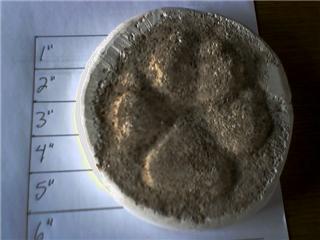








.jpg)